

Learning how to get rid of mold in basement spaces starts with moisture control: scrub visible growth off hard surfaces with detergent and water, fix leaks immediately, dry everything completely, and address remaining mycotoxins, the toxic byproducts causing neurological issues, so the basement stays mold-free long-term.
Key Takeaways
- Moisture control is the key to preventing mold growth in basements and other humid spaces.
- Mold thrives in warm, damp environments like basements, bathrooms, and kitchens where spores spread easily.
- Mycotoxins, toxic byproducts of mold, cause neurological health issues requiring attention and prevention strategies.
- Regular basement maintenance and humidity reduction eliminate conditions that allow mold to establish and return.
What Do Homeowners Need Before Removing Basement Mold?
Proper preparation determines whether basement mold removal succeeds or spreads spores further through the home. Skipping protective gear or the wrong cleaning agent turns a contained job into a larger exposure risk for occupants and pets. Property managers and homeowners should gather equipment and cleaning products before disturbing any moldy surface.
What protective gear is necessary before cleaning basement mold?
A mask or N-95 respirator prevents inhaling airborne mold spores once cleanup begins. Standard household gloves leave the forearm exposed to contact. Gloves extending to the middle of the forearm offer meaningfully better coverage during scrubbing. Goggles without ventilation holes complete the barrier, keeping spores away from the eyes while treating mold on basement walls or mold on concrete basement surfaces.
What cleaning products work best on basement mold?
Enzyme-based formulas built on plant-based enzymes and essential oils treat mold without relying on harsh chemical agents. This approach matters for basements, where limited ventilation traps chemical fumes long after chemical cleaners are applied.
Recommended cleanup supplies:
- N-95 respirator or protective mask
- Forearm-length rubber gloves
- Non-ventilated goggles
- An enzyme-based mold cleaner formulated with a plant enzyme blend
- Sodium chloride, potassium sorbate, clove oil, and lauryl sulfate as exempt supporting ingredients
Gathering these items before starting addresses both the musty basement smell and the visible growth, setting the stage for thorough, repeatable preventing basement mold habits afterward.
How Do Property Managers Stop Basement Moisture at the Source?
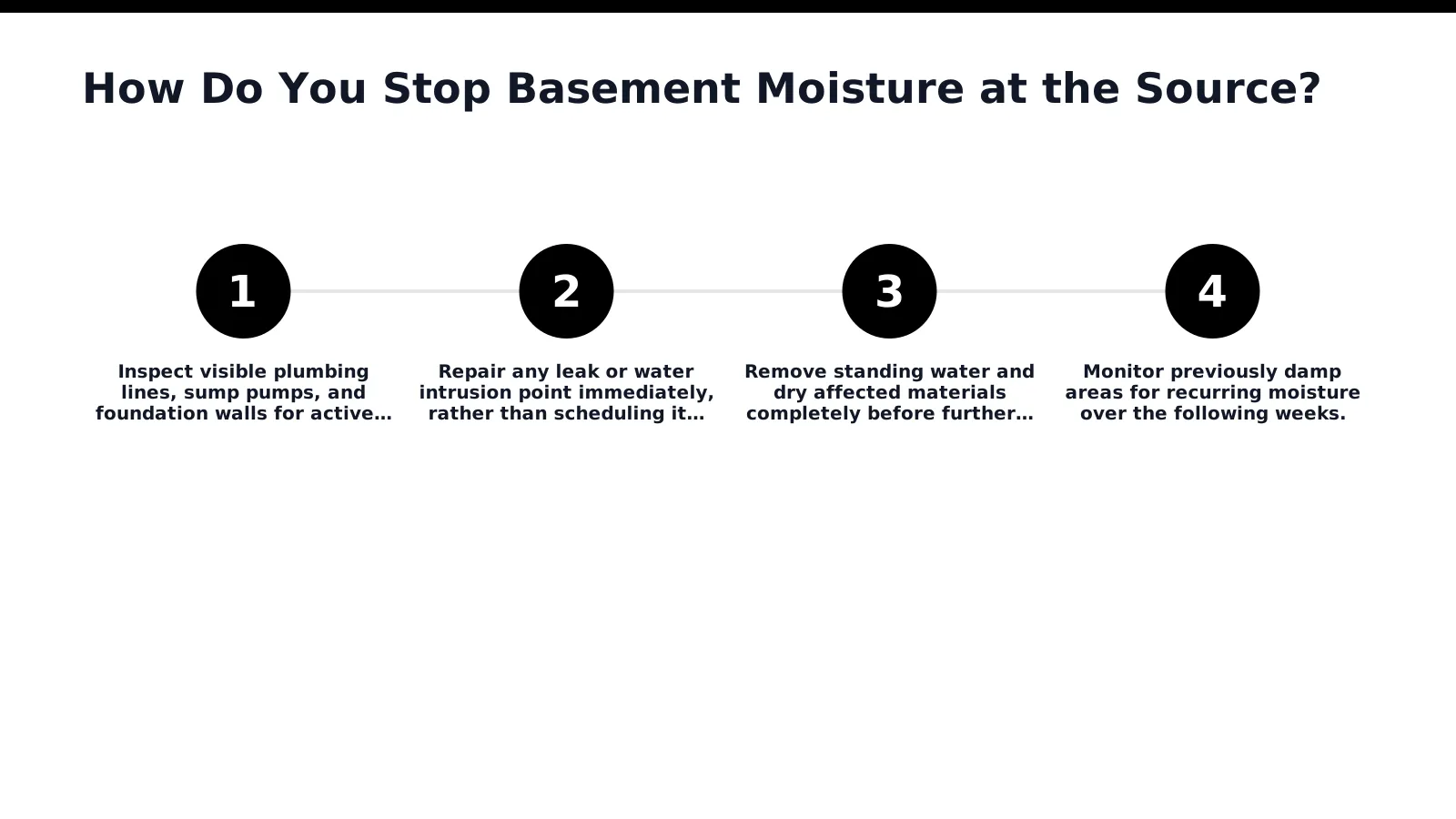
Stopping basement moisture starts with repairing the water intrusion that feeds mold growth, rather than only wiping surfaces clean. Plumbing leaks and other water problems require immediate attention once identified, since delayed repairs give mold a continuous moisture supply. Basements present unique risk because damp materials and accumulated dust create ideal conditions for species like Aspergillus flavus to colonize walls, framing, and stored belongings.
Addressing the water source matters for more than cosmetic reasons. Mold colonies generate mycotoxins, toxic byproducts linked to neurological health concerns, which makes prompt moisture control a health priority rather than a maintenance afterthought. A property manager who delays a plumbing repair risks turning a small leak into a widespread colonization problem that reaches HVAC systems and circulates spores throughout the building.
A practical sequence for basement mold removal follows this order:
- Inspect visible plumbing lines, sump pumps, and foundation walls for active leaks or standing water.
- Repair any leak or water intrusion point immediately, rather than scheduling it for later.
- Remove standing water and dry affected materials completely before further cleaning.
- Monitor previously damp areas for recurring moisture over the following weeks.
Why Does Mold Keep Coming Back in the Same Basement Spot?
Recurring mold growth usually signals an unresolved moisture source, not a cleaning failure. If a wall or corner shows repeated mold after cleaning, hidden leaks or condensation likely feed the colony. Only a full plumbing and structural inspection identifies the true cause. Surface treatment alone cannot stop moisture reaching damp materials and dust that support fungal growth.
How Do Property Managers Remove Mold From Basement Walls and Concrete?
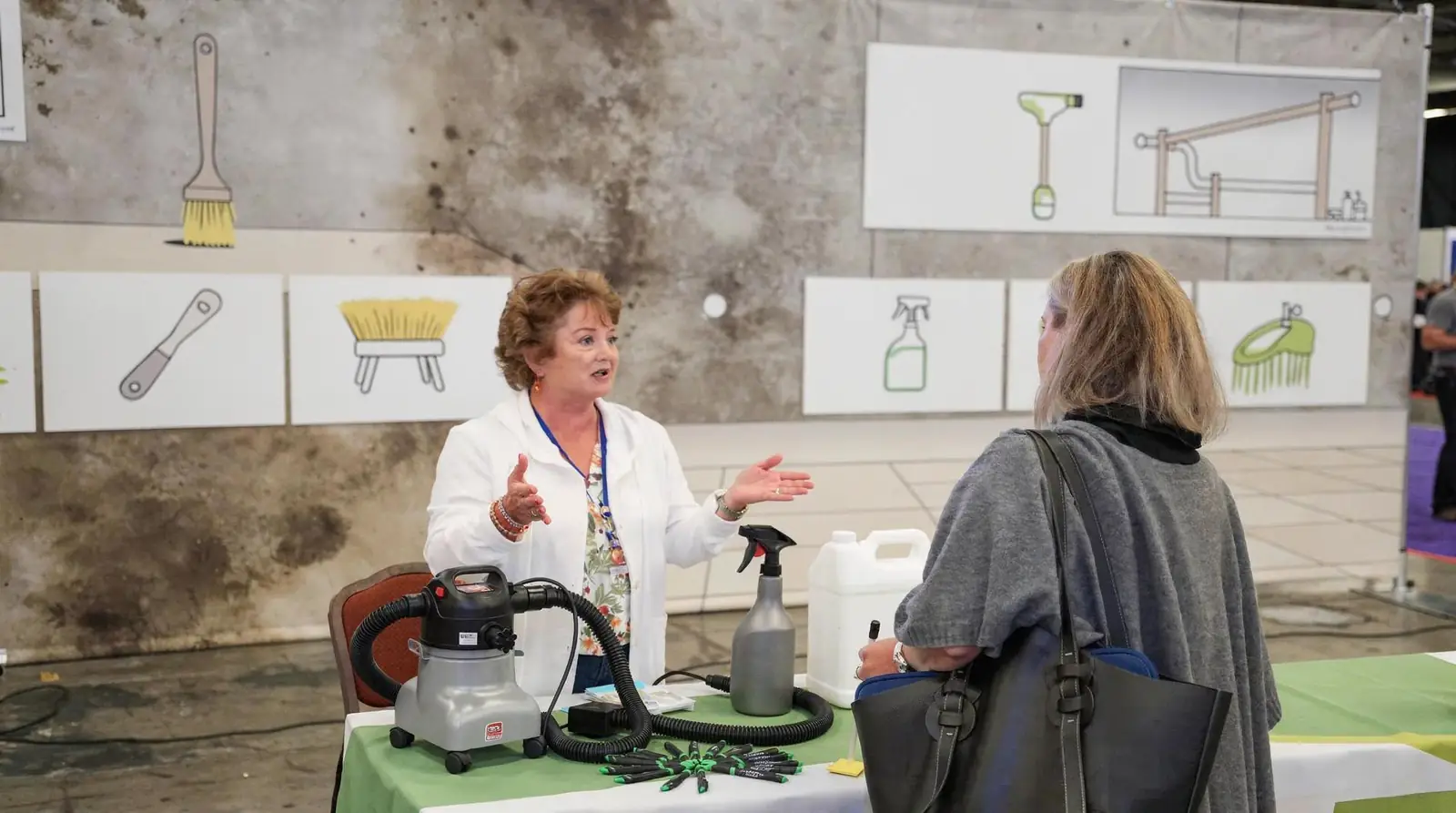
Removing mold on basement walls and mold on concrete basement surfaces requires a two-stage approach: physical scrubbing followed by a treatment that breaks down organic residue at the source. Property managers who skip the second stage often see stains. Musty odors return within weeks, even after a thorough scrub.
Concrete presents a particular challenge. Its porous structure lets mold roots settle below the visible surface, out of reach of a sponge or brush. Basement mold removal on this material demands more than surface cleaning.
How do property managers clean mold off concrete basement walls?
Follow these steps for hard, non-porous surfaces:
- Scrub the affected wall with detergent and water, working the solution into visible stains.
- Dry the surface completely; trapped moisture invites regrowth.
- Apply an enzyme-based mold cleaner to the treated area. These formulations break down existing mold and associated mycotoxins, addressing what scrubbing alone leaves behind.
- Inspect nearby porous materials, such as carpet padding or ceiling tiles, for moisture damage. Materials that have absorbed mold growth often need to be discarded rather than cleaned.
Should property managers choose a barrier product or an enzyme treatment?
The two approaches solve different problems. Barrier-forming products coat the surface and resist future growth, but they leave existing organic material in place underneath that coating. Enzyme cleaners take the opposite route: they break down and remove the organic material already present, rather than sealing it beneath a film.
| Approach | What it does | Limitation |
|---|---|---|
| Barrier coating | Resists future mold growth | Leaves existing organic material intact underneath |
| Enzyme treatment | Breaks down and removes existing mold and mycotoxins | Requires reapplication if moisture returns |
For basements with a documented musty basement smell, the enzyme stage should be prioritized. Odor typically signals active organic material, not just surface staining, and detergent scrubbing rarely resolves it on its own.
How Do Property Managers Eliminate Musty Basement Smell?
Eliminating a musty basement smell requires targeting the mold colonies producing the odor, not just masking it with air fresheners. A musty smell paired with green, black, or white discoloration signals active mold growth on walls, framing, or storage boxes. Treating the source, rather than the symptom, produces lasting results for homeowners and property managers alike.
Property managers can follow this sequence to address the odor at its origin:
- Identify all visible mold colonies, checking corners, sill plates, and areas near floor drains.
- Apply an enzyme-based mold control product directly to affected surfaces as a pre-treatment step.
- Allow the product to dry completely; it forms an invisible antimicrobial barrier that encapsulates remaining mold spores.
- Maintain routine airflow and dehumidification, since the barrier keeps working on residual spores after it dries.
- Recheck treated areas periodically for returning discoloration or odor, especially after humidity spikes.
Odor control sits among the specific applications listed for this pre-treatment approach, distinguishing it from surface-only cleaners that leave spores intact beneath a clean-looking finish.
Why Does the Musty Smell Return After Cleaning?
A returning odor usually means spores survived the initial cleaning pass and resumed growth once moisture reappeared. Wiping visible mold without an encapsulating treatment leaves microscopic colonies behind. Products designed to dry into a spore-encapsulating barrier address this gap by continuing to work long after application, rather than stopping once the surface looks clean.
Can Odor Exist Without Visible Mold?
Yes. Musty odor sometimes precedes visible discoloration. Spore colonies can develop in hidden spots like wall cavities before staining becomes noticeable. Treating suspected areas proactively with an antimicrobial barrier product helps homeowners get ahead of colonies before they spread and darken basement walls.
How Do Homeowners Prevent Basement Mold From Returning?
Long-term prevention of preventing basement mold depends on two factors working together: moisture control and surface protection. Humidity feeds fungal growth, and any surface left untreated after cleanup remains vulnerable to new colonies forming within weeks.
Humidity control forms the foundation of any prevention plan. Basements trap moisture from groundwater, plumbing, and poor ventilation, and mold thrives in exactly those humid conditions. Property managers and homeowners should monitor relative humidity levels and address condensation sources before they become a recurring problem.
Surface protection is the second layer of defense. A preventive antimicrobial barrier product differs from a stain remover in both purpose and timing. Rather than lifting existing discoloration, this type of treatment is designed for pre-treatment, applied to surfaces that have already been cleaned.
When should a barrier treatment be applied?
Two moments call for a barrier application. The first is immediately after cleanup, once existing growth on mold on basement walls or mold on concrete basement surfaces has been removed. The second is before enclosure, meaning building materials get treated ahead of framing, drywall, or finishing work that would otherwise seal moisture-prone areas from view.
A properly applied barrier leaves a protective layer on the treated surface. This layer resists future mold growth over time, rather than only masking a musty basement smell temporarily.
What does effective basement mold removal actually involve?
Effective basement mold removal combines two actions: breaking down existing organic material and preventing its return. Cleanup addresses the visible problem. Barrier treatment addresses the recurrence risk. Skipping either step leaves the basement exposed to the same conditions that caused the original outbreak, undermining any how to get rid of mold in basement effort from the start.
FAQ
What protective gear is needed before removing basement mold?
An N-95 respirator, forearm-length rubber gloves, and non-ventilated goggles prevent spore inhalation and skin or eye contact during cleanup.
What should basement mold be cleaned with?
An enzyme-based cleaner with a plant enzyme blend, plus sodium chloride, potassium sorbate, clove oil, and lauryl sulfate, works effectively while avoiding harsh chemicals that trap fumes in basements.
How is basement mold kept from coming back?
Fixing leaks immediately, drying all surfaces completely, and controlling moisture at the source keeps mold from returning. Mold thrives in warm, damp basement conditions and produces harmful mycotoxins.
Conclusion
In closing, basement mold remediation requires both immediate treatment and sustained prevention through moisture control, ventilation, and regular inspection. Addressing mold at its source, excess humidity and water intrusion, stops recurrence at the foundation. Enzyme-based cleaning solutions target mold and its toxic byproducts effectively, supporting a comprehensive remediation strategy. By combining proper environmental management with thorough cleaning protocols, homeowners establish lasting protection for their basements and the health of their indoor spaces.


