

How to Get Rid of Mold in Bathroom
What Do You Need Before Removing Bathroom Mold, Get Rid of Mold in Bathroom
Bathroom mold removal requires scrubbing surfaces with a solution containing antimicrobial agents like clove oil, found in US Enzyme's plant-based formulas, to break down mycotoxins. Afterward, maintain ventilation, wipe moisture daily, and apply enzyme-based sprays weekly to prevent regrowth permanently.
Key Takeaways
- Weekly cleaning routines with surface wiping prevent mold growth in moisture-prone bathroom areas.
- Mold exposure causes allergic reactions, respiratory illnesses, and neurological irritations from toxic mycotoxin byproducts.
- Areas under 10 square feet require standard cleaning; larger infestations need professional assessment and remediation.
- Wiping shower surfaces dry after each use eliminates moisture that mold spores require to thrive.
What Do You Need Before Removing Bathroom Mold?
Proper preparation determines whether a cleanup succeeds or spreads spores further through a bathroom. Three categories of readiness matter most: personal protection, an honest assessment of the problem's size, and the right cleaning formula. Skipping any one of these steps turns a manageable task into a bigger health and property risk.
How to get rid of mold in bathroom work safely starts with Black Mold Symptoms, Identification & Safe Removal. A mask, rubber gloves, and goggles limit direct contact with mold spores while scrubbing grout, silicone, or ceiling surfaces. These spores become airborne easily once disturbed, so covering the eyes, hands, and airway is not optional.
How much mold can be cleaned without professional help?
Homeowners can typically manage the job themselves when the affected patch covers less than 10 square feet. Larger infestations, especially those tied to water damage, usually signal a bigger moisture problem behind the wall or ceiling that needs professional evaluation before cleaning begins.
What should go into a mold cleanup kit?
A practical kit includes:
- N-95 mask or respirator
- Forearm-length rubber gloves
- Sealed, ventilation-free goggles
- A plant-based enzyme cleaner formulated with essential oils rather than harsh chemicals
Choosing an enzyme-based formula matters beyond surface stains. Mycotoxins, the toxic residue mold leaves behind, continue causing neurological symptoms long after visible spots disappear, making the right product as important as the right gear.
How Do You Remove Mold From Shower Grout And Silicone?
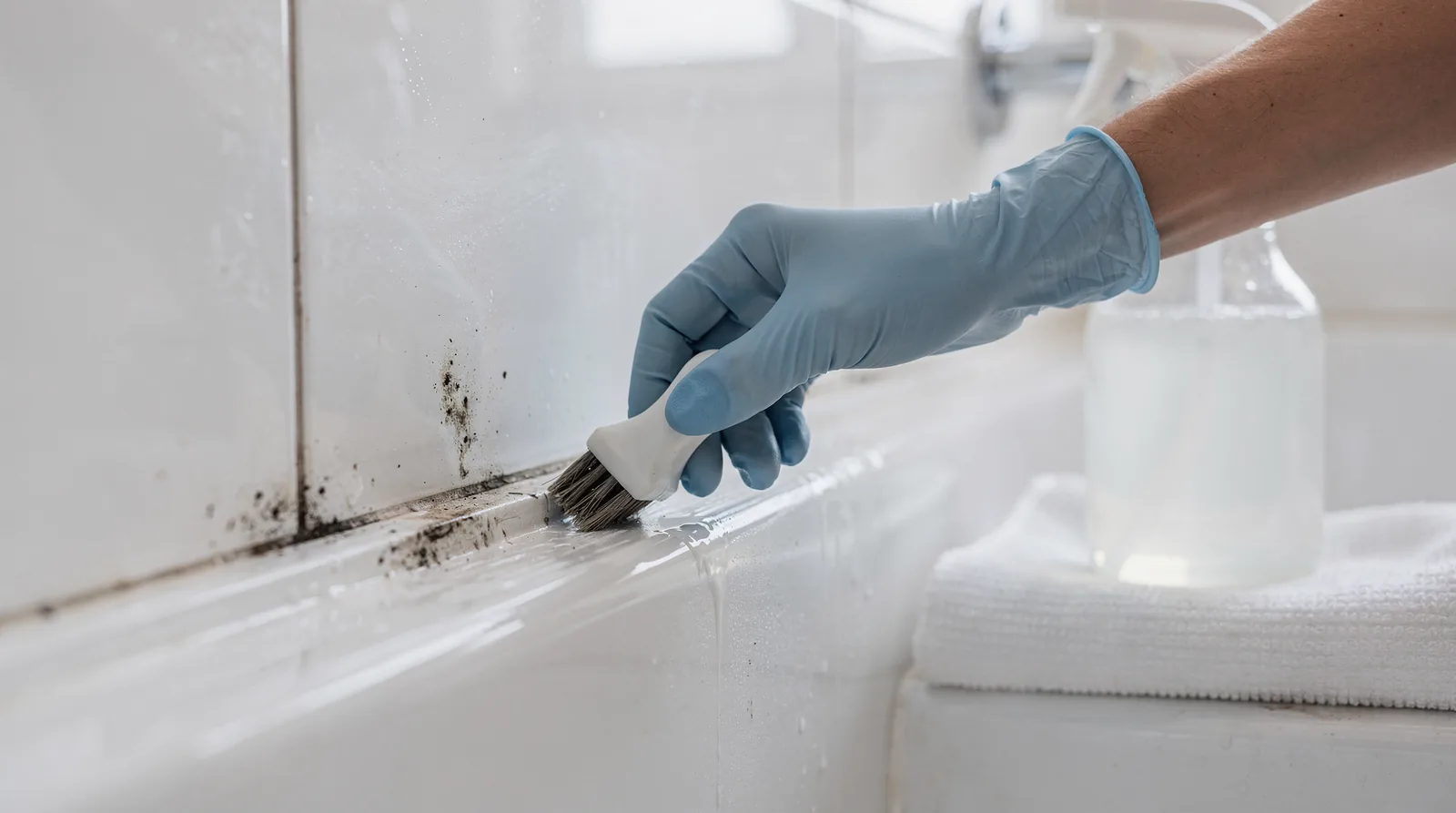
Grout and silicone demand a cleaner that penetrates porous and semi-porous surfaces without dilution guesswork. MoldStainKlear Interior Mold Stain Remover ships at full strength, so no mixing step stands between the bottle and the stain. That matters most on grout lines and caulk, where diluted products often fail to reach embedded spores.
Follow this sequence for shower mold removal on grout and silicone seals:
- Ventilate the bathroom and apply the cleaner directly to affected grout lines or caulk, since dilution is not required.
- Let the formula sit on the stain long enough to break down surface residue.
- Scrub lightly with a non-abrasive brush, focusing on grout joints and silicone edges.
- Rinse thoroughly and dry the surface to prevent moisture from re-feeding spores.
Avoid reaching for bleach as a shortcut. Bleach poses an inhalation hazard and can damage certain shower materials, particularly silicone and some grout sealants, rather than resolving the underlying contamination.
What ingredients are inside an enzyme-based mold cleaner?
The exempt ingredient list behind these formulas includes a plant enzyme blend, sodium chloride, potassium sorbate, clove oil, and lauryl sulfate. These components work together to target organic staining without relying on chlorine-based chemistry.
How often should grout and silicone be cleaned to prevent mold on grout from returning?
A weekly routine keeps mold on grout and silicone from re-establishing itself. Wipe down surfaces with a cleaner and dry the shower after each use. Moisture left standing on grout lines is what invites spores back. This habit matters just as much after treating black mold in bathroom areas. Surface cleaning alone will not stop regrowth if humidity lingers.
Learning how to clean mold off silicone without damaging the seal protects the shower's structure long-term. Gentle scrubbing paired with full-strength enzyme treatment, followed by consistent drying, addresses both the visible stain and the conditions that let it return.
How Do You Treat Black Mold On Ceilings?
Treating black mold on a ceiling requires two distinct steps: removing the existing stain and blocking future spore activity. Skipping either step leaves homeowners vulnerable to regrowth or lingering health risks. Moldy bathroom surfaces carry documented hazards like allergic reactions and respiratory irritation. Black mold in bathroom ceilings tends to concentrate near exhaust fans and shower steam paths, where moisture lingers longest.
The sequence matters. A stain remover lifts the visible discoloration first; then, a preventive barrier product is applied to keep spores from reactivating.
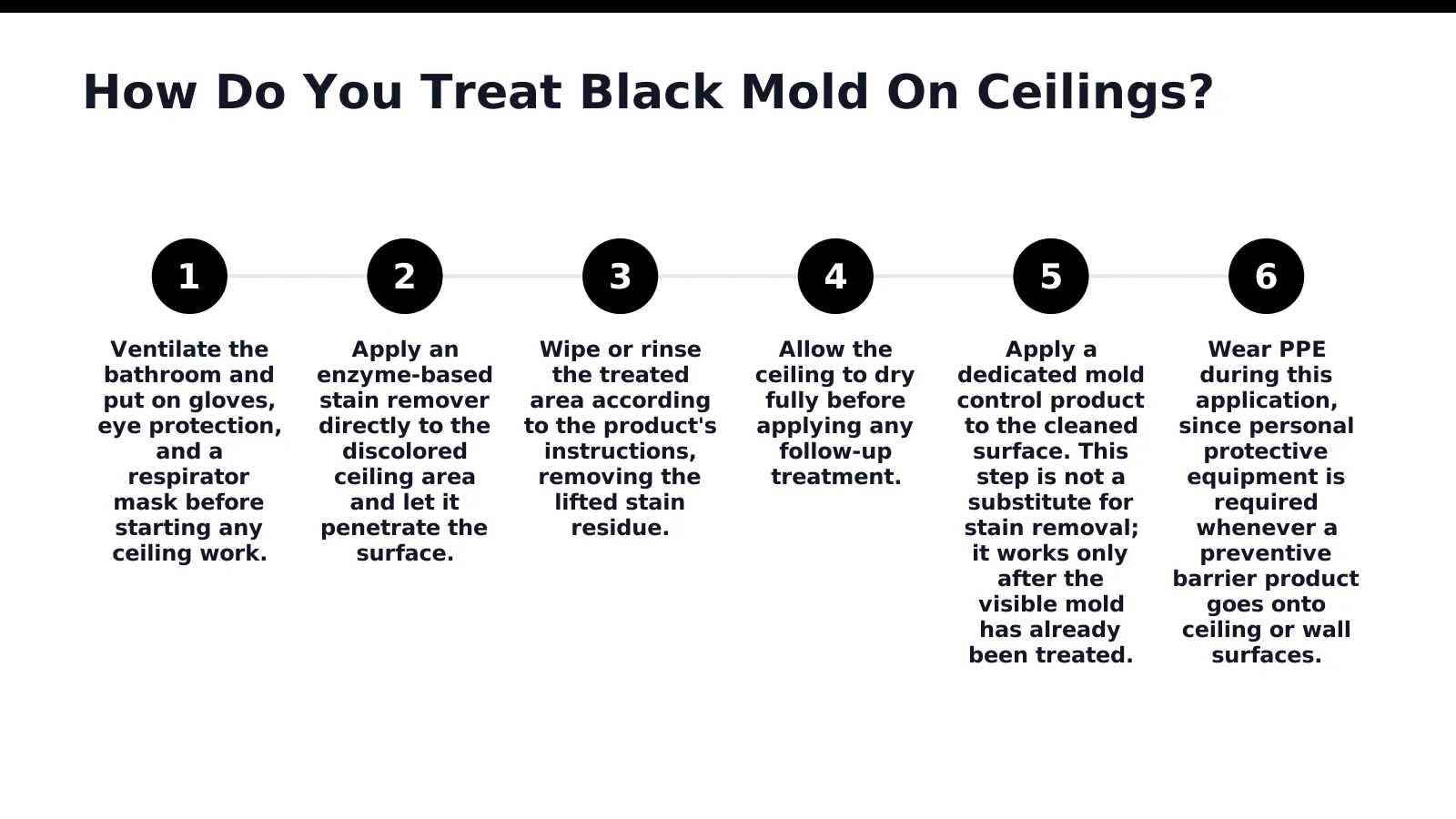
- Ventilate the bathroom and put on gloves, eye protection, and a respirator mask before starting any ceiling work.
- Apply an enzyme-based stain remover directly to the discolored ceiling area and let it penetrate the surface.
- Wipe or rinse the treated area according to the product's instructions, removing the lifted stain residue.
- Allow the ceiling to dry fully before applying any follow-up treatment.
- Apply a dedicated mold control product to the cleaned surface. This step is not a substitute for stain removal; it works only after the visible mold has already been treated.
- Wear PPE during this application, since personal protective equipment is required whenever a preventive barrier product goes onto ceiling or wall surfaces.
Why does mold keep coming back after cleaning the ceiling?
Cleaning removes the stain but does not always stop spores embedded in porous material from reactivating. A preventive barrier product dries into an invisible antimicrobial layer that encapsulates remaining spores and continues working after it sets. Without that second step, ceilings in humid bathrooms often redevelop the same dark patches within weeks.
Is ceiling mold more dangerous than shower mold?
Both carry similar risks. Health effects linked to moldy bathroom surfaces, including allergic reactions and respiratory irritation, apply equally whether the growth sits on the ceiling, grout, or silicone seals. Ceiling placement makes early detection harder, since spores there often go unnoticed until staining becomes visible.
How Do You Keep Bathroom Mold From Returning?
Lasting prevention depends on cutting off the moisture supply before fungal colonies re-establish themselves. Bathrooms resist long-term mold control because no other room in a home holds moisture as consistently as a shower stall or vanity area. Skipping ventilation after bathing lets dampness linger on tile, grout lines, and silicone seals, feeding the same spores that caused the original outbreak.
A workable prevention routine needs two conditions in place first: a functioning exhaust fan or an openable window, and cleaned surfaces free of visible growth. Once those conditions exist, homeowners and renters can follow a repeatable sequence.
- Turn on the exhaust fan or open the window before starting any shower, and leave it running during cleaning.
- Keep ventilation active for a stretch of time after bathing to clear residual humidity from the room.
- Wipe down shower walls, grout, and silicone seams with a dry towel immediately after use to prevent standing moisture.
- Treat problem areas, including bathroom ceiling mold zones and recurring mold on grout, with a plant-enzyme cleaner on a weekly basis.
- Apply an antimicrobial barrier product to the cleaned, dry surface to block new colonies from forming.
Does One Product Handle Both Cleaning And Prevention?
No single formula does both jobs well. Mold Control dries into an invisible barrier that encapsulates spores after a surface has already been cleaned. It is built for prevention, not for lifting existing stains. Enzyme-based removers handle the active cleanup, including black mold in bathroom grout lines and stubborn silicone discoloration. Mold Control locks in the result. Many prevention plans rely on both products working in sequence rather than expecting one formula to cover the entire job.
What If Bathroom Mold Keeps Coming Back?
Recurring mold signals a scope problem, not a cleaning failure. Repeated outbreaks across large surfaces, or spread tied to water damage, point toward conditions a spray bottle cannot fix. Guidance on how to get rid of mold in bathroom spaces assumes a contained patch, not an ongoing source of moisture feeding the growth.
When does bathroom mold require professional help?
Extensive water damage, or mold growth covering more than roughly 10 square feet, calls for professional remediation rather than a DIY approach. A patch that size on bathroom ceiling mold or along a tile seam has usually moved past surface treatment and into the substrate. At that scale, repeated home cleaning only buys time between flare-ups.
For stubborn or large-scale cases, two paths help close the gap between one-time cleaning and lasting control:
- Scale up the treatment volume. Contractor and 55-gallon drum pricing is available for jobs that outgrow retail-sized bottles, useful for whole-bathroom or multi-room outbreaks.
- Remove debris, not just stains. A lightweight, low-profile HEPA backpack vacuum clears settled mold debris after treatment, reducing material left behind to resettle on grout lines or silicone seams.
Who can homeowners ask about persistent mold questions?
FAQ
What protective gear do you need before removing bathroom mold?
A mask, rubber gloves, and goggles limit direct contact with airborne spores while scrubbing grout, silicone, or ceiling surfaces during cleanup.
Why should you avoid using bleach on shower mold?
Bleach poses an inhalation hazard and damages certain shower materials, particularly silicone and some grout sealants, instead of resolving the underlying mold contamination.
What makes enzyme-based cleaners effective against mold residue?
Enzyme-based cleaners contain a plant enzyme blend, sodium chloride, potassium sorbate, clove oil, and lauryl sulfate, which target organic staining and address mycotoxins without relying on chlorine-based chemistry.
Conclusion
In closing, safe bathroom mold removal requires a systematic approach combining thorough cleaning, mycotoxin remediation, and sustained prevention practices. Enzyme-based solutions address both visible mold and its toxic byproducts, delivering efficacy without harsh chemical exposure. Implementing proper ventilation, moisture control, and regular maintenance protocols establishes conditions that prevent recurrence. This comprehensive strategy protects the indoor environment and supports the health of occupants over time.
Homeowners facing recurring black mold in bathroom fixtures or unresolved mold on grout can contact US Enzyme directly by email at info@usenzyme.com for product guidance. Direct contact helps match treatment volume and vacuum follow-up to the actual scope of the problem.


