

Musty car AC smell results from condensation collecting on the evaporator, which allows mold and mildew to grow, according to Consumer Reports senior director Jake Fisher. Running the fan without air conditioning for ten minutes after driving dries the evaporator. An enzyme-based mold cleaner, such as US Enzyme's formulations, breaks down existing mold and mycotoxins for a lasting fix.
Key Takeaways
- Musty car AC smells originate from condensation buildup in the evaporator inside the vehicle's heating and cooling system.
- Mold and mildew accumulation triggers the unpleasant odor when the air conditioning system activates.
- Consumer Reports' senior director Jake Fisher identifies condensation as the primary source of sweaty sock-like AC smells.
- Removing AC odors requires addressing the mold and mildew growth within the evaporator system directly.
What Causes Musty Smell In Car AC?
Trapped moisture in the evaporator drives the musty smell in car ac systems that frustrates so many drivers. The evaporator naturally collects condensation during normal cooling cycles. Left sitting too long, that water becomes a breeding ground for mold and bacteria, and the odor follows shortly after.
Airflow makes the problem worse before it gets better. Every time the AC runs, air passes directly over the damp evaporator coil and picks up mold spores along the way. Those spores feed on the residual moisture, multiply, and ride the airflow straight into the cabin, which explains why the smell often hits hardest right at startup.
The issue runs deeper than surface odor. Mold growing inside mold in car air vents can generate mycotoxins, toxic byproducts of mold linked to neurological health issues. Standard wipe-downs and air fresheners rarely reach this contamination. They mask smell without touching the underlying spores or toxin residue.
Why Does Car AC Smell Worse On Startup?
Moisture sits undisturbed in the evaporator while the car is parked, giving mold extra time to multiply. The first blast of air stirs up concentrated spores and stale, damp air trapped in the ductwork.
Is Musty AC Smell Actually Mold?
In most cases, yes. The odor typically signals active mold and bacterial growth feeding on evaporator condensation, not simply stale air.
Common contributing factors include:
- Extended AC use without a proper dry-out period
- Clogged or blocked evaporator drain lines
- High-humidity climates that slow moisture evaporation
- Infrequent cabin air filter changes
Enzyme-based formulas offer a lower-toxicity way to remove mildew from car interior spaces, breaking down mold structures and mycotoxin residue rather than simply covering the smell with fragrance.

What Tools Are Needed To Start?
Four items prepare a car owner to tackle a musty smell in car ac before it worsens: protective gear, an enzyme cleaner, a fogging tool, and a vacuum for tight spaces. Skipping protective equipment exposes a driver to mold spores stirred loose during cleaning. Gearing up correctly matters before any product touches the vents.
Is personal protective equipment necessary for a small cleaning job?
Yes. Personal protective equipment is required when applying mold treatment products inside a vehicle, regardless of how minor the odor seems. Gloves and a mask limit contact with disturbed spores and treatment chemicals during application.
What products actually treat mold in car air vents?
Enzyme-based cleaners built on a Plant Enzyme Blend, often combined with ingredients such as clove oil under the FIFRA 25(b) exemption, break down organic mold residue without harsh synthetic chemicals. These formulas target the biological matter responsible for mold in car air vents rather than masking the smell.
Before starting, gather the following:
- Gloves and a mask (PPE, non-negotiable)
- An enzyme cleaner containing a Plant Enzyme Blend and clove oil
- A compact fogging device, such as the Commander Tri-Jet Fogger, to distribute treatment evenly through vents and cabin air
- A lightweight, low-profile backpack HEPA vacuum for spot cleaning under seats and in footwells
This kit covers surface application, air distribution, and residue removal. The three steps required to remove mildew from car interior spaces effectively.
How Is Mold Cleaned From Vents?
Cleaning mold in car air vents requires a targeted enzyme or antimicrobial treatment, not just air freshener sprays. Spraying scent over contaminated vents only masks the musty smell in car ac systems temporarily. Spores continue multiplying behind the dashboard. A proper cleaning process breaks down the mold itself and leaves lasting protection.
The process works best as a short sequence of steps rather than a single spray-and-done action.
- Locate the source. Run the AC on high with the fan set to fresh air, then note where the musty odor concentrates—usually the vents or the evaporator housing.
- Apply a dedicated mold control treatment. A formula designed for automotive mold dries into an invisible antimicrobial shield. On contact, this shield encapsulates and physically crushes mold spores, rather than simply coating the surface with fragrance.
- Let the barrier set. The antimicrobial layer that remains on treated surfaces continues protecting against future mold growth long after the initial application dries.
- Allow full drying time. Treated vent surfaces need to dry completely before the vehicle returns to regular use, and the cabin should stay ventilated during this period.
- Recheck for odor. Run the AC again once dry; persistent smell signals deeper contamination in the evaporator core.
How Much Product Is Needed to Clean Vents?
Vent treatment uses far less product than whole-room applications. Manual or compression spray application covers approximately 500 square feet per gallon, depending on sprayer type and surface absorbency—a useful benchmark showing that a small vent area needs only a light, targeted spray rather than heavy saturation.
Can Mold Come Back After Treatment?
Mold returns when moisture reaccumulates and no protective barrier remains on the surface. Because the antimicrobial shield stays active on treated vent surfaces, recontamination slows significantly compared to untreated systems. Regular reapplication, paired with efforts to remove mildew from car interior fabrics and carpet, keeps the cabin drier and less hospitable to new growth.
How Is Mildew Removed From The Interior?
Removing mildew from car interiors requires an enzyme-based cleaner applied directly to affected fabric, carpet, and trim. Biological catalysts in these formulas break down the organic structures that make up mold, loosening residues so they lift away instead of embedding deeper into upholstery fibers. Car owners who want to remove mildew from car interior surfaces without harsh chemical exposure inside a closed cabin benefit most from this approach.
Follow these steps for effective treatment:
- Vacuum loose debris and spores from seats, floor mats, and carpet before applying any product.
- Apply an enzyme cleaner formulated to target mold, mildew, stains, and bacteria directly onto affected fabric and carpet.
- Allow the solution to sit and let the enzymes act on the organic material rather than wiping immediately.
- Blot or wipe the treated area with a clean cloth to remove loosened residue.
- Repeat the application on heavily soiled or absorbent sections, since fabric and carpet require more product per treated area than hard, non-porous surfaces.
- Let the cabin air out with doors open to support drying and finish with an essential-oil-infused enzyme formula that leaves surfaces smelling fresh without chemical residue.
Does Vinegar Kill Mold in a Car?
Vinegar has mild antimicrobial properties, but it lacks the enzymatic action that breaks down mold's organic structure at the source. Enzyme-based cleaners target the material mold feeds on, not just the surface odor, offering a more thorough result on fabric and carpet.
Can Mildew Come Back After Cleaning?
Mildew returns when moisture and organic residue remain in absorbent materials like carpet and cloth seats. Treating those areas with an enzyme formula reduces leftover organic matter, lowering the chance of regrowth compared to wiping with chemical cleaners that leave residue behind. Regular vacuuming paired with enzyme treatment keeps mold in car air vents and cabin fabric from re-establishing after the initial cleaning.
What If The Musty Smell Returns?
Recurring odor points to moisture that never fully cleared or mold that regrew inside the evaporator housing. Evaporator condensation forms naturally in every vehicle. If that water collects too long, mold returns even after a thorough cleaning. Repeated treatments without addressing mycotoxins explain why some owners battle the same musty smell in car ac season after season.
Why Does the Odor Keep Coming Back After Cleaning?
Most remediation methods target visible mold but overlook the mycotoxin byproducts mold leaves behind. The industry has only recently recognized this gap, and few consumer products address it directly. Without breaking down these residues, mold in car air vents can regenerate even when surfaces look and smell clean.
When Should a Car Owner See a Dealer Instead of Retreating the AC?
A shift from musty to burning or chemical odor signals a different mechanical issue entirely. Owners noticing that change should stop self-treatment and schedule a dealer inspection immediately rather than reapplying cleaner.
For owners attempting another round of treatment before that step, follow this sequence:
- Confirm the odor is still musty, not burning or chemical.
- Reapply an enzyme-based product to all affected vent and cabin surfaces.
- Keep pets away from treated areas until surfaces dry completely.
- Run the AC on fresh-air mode afterward to reduce lingering moisture.
Consistent moisture control, paired with mycotoxin-focused treatment, offers the most reliable way to remove mildew from car interior spaces for good.
Addressing musty odors in a vehicle's air conditioning system requires a systematic approach combining mechanical cleaning, microbial treatment, and preventive maintenance. Targeting the root cause—mold and bacterial growth within the system—eliminates odors at their source rather than masking them temporarily. Enzyme-based solutions offer an effective alternative to harsh chemical treatments, breaking down organic matter and mycotoxins that produce those unpleasant smells while maintaining safety for vehicle interiors and occupants.
FAQ
What causes the musty smell in a car AC?
Condensation collects on the evaporator, creating a breeding ground for mold and bacteria. This growth produces mycotoxins, toxic byproducts of mold linked to neurological health issues, which generate the persistent odor.
How is musty AC odor permanently removed?
Run the fan without AC for ten minutes after driving to dry the evaporator, then apply an enzyme-based cleaner. Enzyme formulas break down existing mold structures and mycotoxin residue instead of masking the smell.
Is protective equipment necessary when treating car AC mold?
Yes, gloves and a mask are required during application, regardless of how minor the odor seems. This protective gear limits contact with mold spores stirred loose during the cleaning process.
RVs and boats: same cause, bigger problem
The mechanism is identical to a car — an evaporator coil producing condensation, organic material collecting on it, and biofilm forming. What changes in an RV or boat is scale and dwell time. There is more soft furnishing to hold odor, and the vehicle often sits unused for months at a time in exactly the humid, closed conditions mold prefers.
Three differences worth planning around:
- Storage is the risk window. Most RV and marine mold problems start during off-season storage, not during use. A sealed, unventilated cabin in summer is a growth chamber.
- Soft contents matter more. Cushions, mattresses, curtains and headliners all hold residue, and wiping hard surfaces alone will not resolve the smell.
- Check the bilge and any water system. On a boat, persistent musty smell frequently traces to standing water rather than the air conditioning.
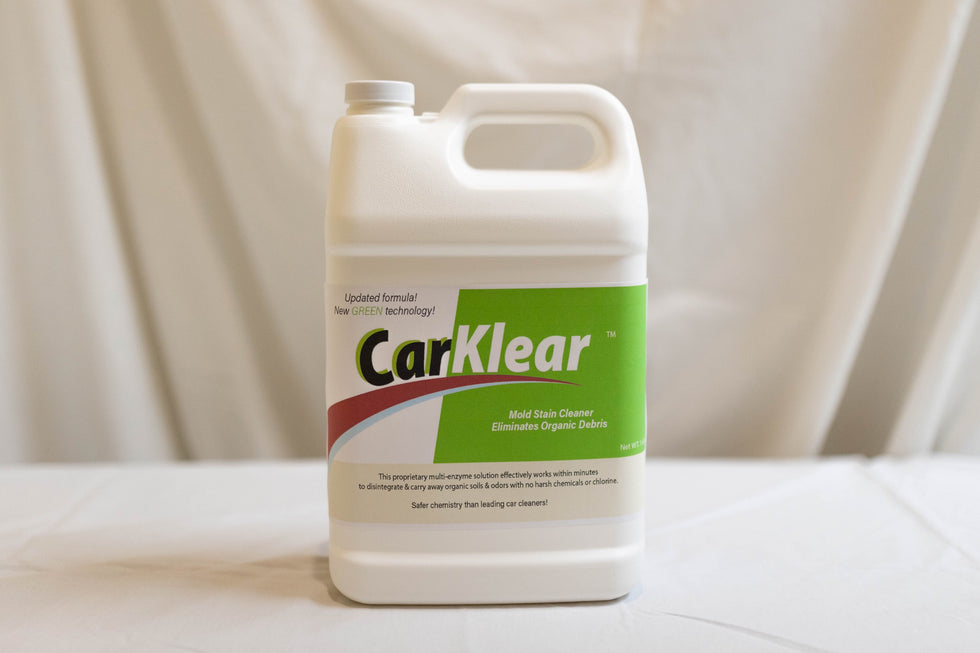
CarKlear is formulated for vehicle, RV and marine interiors specifically, and for a cabin large enough to justify it, fogging reaches the soft contents that hand-wiping never will.
Related reading
- What is biofilm and why does it matter in HVAC? — why the smell comes back after cleaning
- What are mVOCs? — what a musty smell actually is
For this job
CarKlear™ (motor vehicles, RVs & watercraft)
Made for vehicle evaporators and cabin air — cars, RVs and boats.


