

Musty odors, allergy flare-ups when heating or AC runs, and visible spots near vents signal HVAC mold growth. Thousands of microscopic spores circulate through ductwork each cycle, triggering respiratory irritation and worsening indoor air quality. US Enzyme's Mold Control forms an antimicrobial shield that crushes spores, covering approximately 1,400 square feet per gallon when fogged.
Key Takeaways
- HVAC systems circulate thousands of microscopic mold spores throughout home air ducts continuously.
- Mold thrives in dark, damp areas like air vents, basements, and crawl spaces.
- Mold exposure causes neurological health issues through mycotoxins, toxic byproducts of mold growth.
- US Enzyme's plant-based enzyme supplements support wellness by addressing mycotoxin-related health concerns.
What Do You Need Before Inspecting Your HVAC?
Three items matter most before a mold inspection begins: protective gear, a plant-based enzyme cleaner, and a plan for ventilating the space afterward. Skipping preparation risks spreading spores through the ductwork or exposing residents to mold particles during the process, so property managers and homeowners sensitive to indoor air quality achieve the most protection by completing every step rather than treating any one of them as optional.
Personal protective equipment comes first. Gloves, eye protection, and a properly rated respirator mask are required before applying any enzyme-based treatment near HVAC components, since dislodged spores become airborne quickly during inspection.
Product choice matters just as much as protection. Formulations built from plant-based enzymes and essential oils clean mold in HVAC systems without introducing harsh synthetic chemicals into shared air.
Why choose an enzyme cleaner over a standard disinfectant?
Standard disinfectants often mask musty odors instead of resolving their source. An enzyme-based mold cleaner breaks down existing mold. Mycotoxins at the molecular level, producing a lasting fix rather than a temporary cover-up.
Before beginning inspection or treatment, gather the following:
- Gloves, eye protection, and a respirator mask
- An enzyme-based cleaner formulated with plant enzymes and essential oils
- A ventilation plan, such as open windows or exhaust fans, for use after application
Ventilating the treated area afterward keeps residents safe as the system returns to normal operation.
What Are the Signs of Mold in Your HVAC?
Musty odors and allergy flare-ups that worsen when the furnace or air conditioner runs signal a likely case of mold in an HVAC system. These symptoms often point to hidden growth rather than a passing smell. Left unaddressed, contaminated ductwork keeps circulating spores through every room, turning a small moisture problem into a whole-house air quality issue.
Evaporator coils create the ideal breeding ground. Condensation collects on these coils during normal cooling cycles. That trapped moisture allows mold and mildew colonies to take hold. The result is often mold in an air conditioner long before any visible sign appears on a wall or ceiling.
Why does mold hide in air ducts and vents?
Mold favors dark, damp, tucked-away spaces, and vent systems check every box. Mold in air ducts and mold in vents thrives behind grilles, inside bends, and along seams where light and airflow rarely reach. Much like the growth found in basements, crawl spaces, and behind appliances. Because these areas stay hidden from routine cleaning, contamination can spread for months before anyone notices a problem.
What symptoms suggest hvac mold removal is needed?
Recurring musty smells whenever the system cycles on rank among the clearest indicators. Allergy symptoms — sneezing, congestion, watery eyes — that flare only during heating or cooling season also point to airborne mold exposure.
Property managers and homeowners should watch for:
- A persistent musty or earthy odor near vents or the air handler
- Allergy or respiratory symptoms that intensify when the system runs
- Visible discoloration on coils, drain pans, or vent covers
- Unexplained symptom relief when the system stays off
Recognizing these patterns early makes learning how to clean mold from HVAC components far less costly than waiting for full contamination.
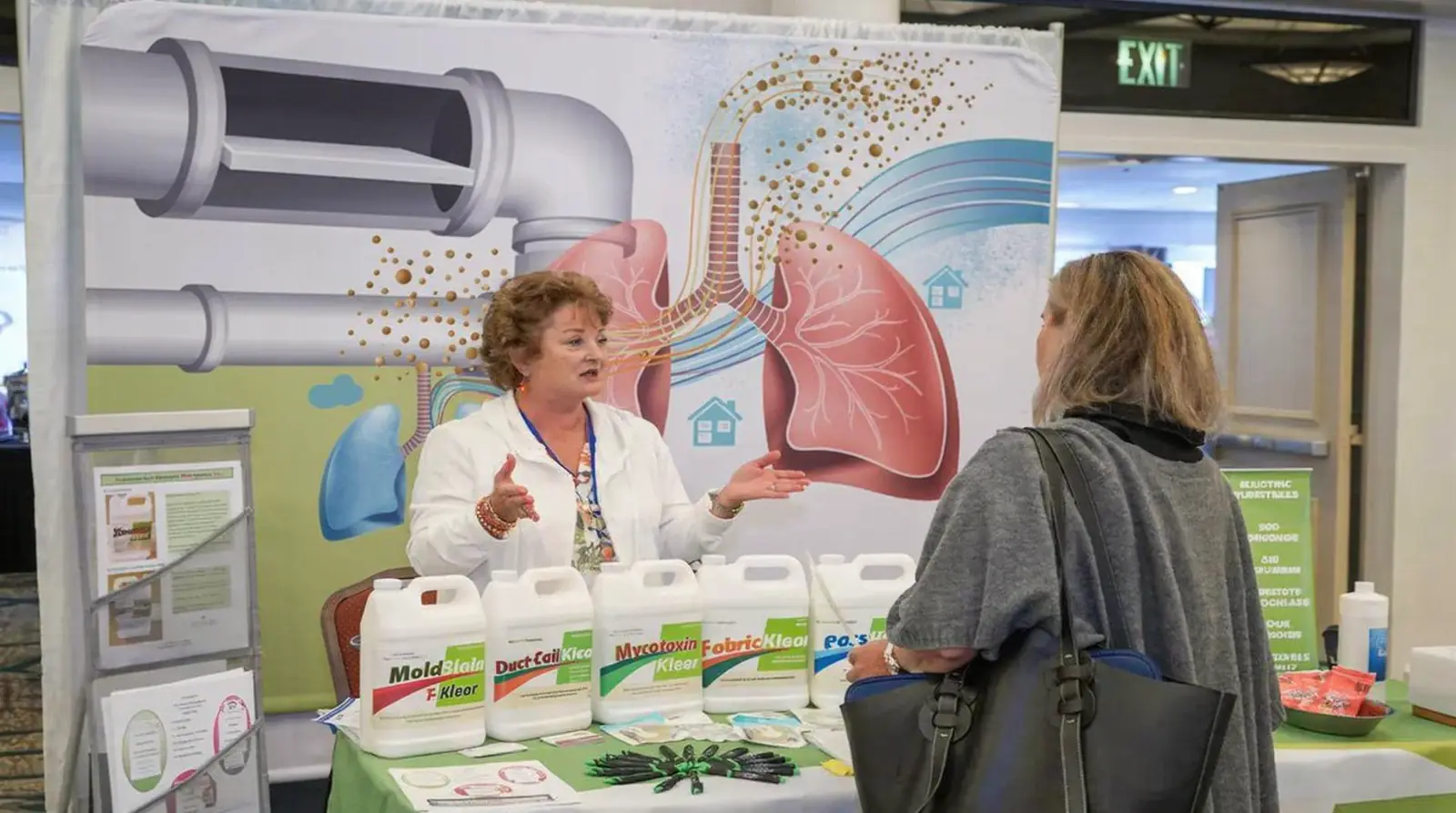
What Health Risks Does HVAC Mold Cause?
Mold in an HVAC system compromises indoor air cleanliness and triggers several health problems for anyone breathing that circulated air. Each heating or cooling cycle pushes thousands of microscopic mold spores through mold in air ducts, spreading contamination throughout a home. Occupants inhale these spores without ever seeing them, since they remain nearly invisible to the naked eye.
The danger extends beyond spores alone. Mold releases mycotoxins, toxic byproducts linked to neurological health issues that standard remediation methods frequently overlook. Removing visible mold does not eliminate these compounds. Mycotoxins can persist on surfaces and within duct materials long after a cleaning crew declares a job finished.
Can mold in vents make a household sick?
Yes. Residents exposed to mold in vents commonly report allergy flare-ups, respiratory irritation, and other unexplained symptoms that worsen when the system runs. Children, older adults, and individuals with pre-existing respiratory sensitivities face heightened risk.
Does mold in an air conditioner cause property damage too?
Unaddressed mold in air conditioner components does more than threaten health. It damages the heating and cooling unit itself, shortens equipment lifespan, and decreases property value over time.
Consider the combined risks of ignoring contamination:
- Respiratory symptoms — coughing, wheezing, and allergy flare-ups tied to system cycles
- Neurological effects — linked to mycotoxin exposure, often missed by conventional cleaning
- Equipment damage — reduced HVAC performance and shortened unit lifespan
- Property value loss — a documented consequence of prolonged, untreated contamination
Effective hvac mold removal requires addressing spores and mycotoxins together, not treating visible growth as the entire problem.
How Do You Clean Mold From HVAC Systems?
Correct cleaning requires enzyme-based products, proper application equipment, and a follow-up barrier treatment. Skipping any one of these three elements leaves spores behind. Those spores recirculate through ductwork the next time a system cycles on. Property managers and homeowners dealing with unexplained allergy flare-ups near vents should treat the process as a sequence, not a single spray-and-wipe task.
How to clean mold from HVAC components effectively:
- Identify all affected surfaces. Inspect coils, drain pans, duct interiors, and vent covers before treatment begins, since mold hides in areas outside direct sightlines.
- Apply an enzyme-based mold stain remover. An enzyme formula documented as fully effective against all species of mold stains breaks down organic residue on hvac mold removal surfaces without relying on harsh chemical agents.
- Choose an application method suited to the space. Deep duct interiors and enclosed cavities respond well to fogging or electrostatic spraying, since both formats reach hidden surfaces that manual wiping cannot access.
- Seal the treated surfaces with an antimicrobial barrier. A dedicated mold control spray dries into an invisible shield that encapsulates spores and physically crushes them on contact.
- Confirm ongoing protection. The barrier left behind continues guarding treated surfaces against renewed growth well after the initial application, reducing the odds of repeat contamination.
Is It Safe to Clean Mold in Air Ducts Without Professional Help?
Homeowners can safely manage light-to-moderate mold in air ducts using natural-ingredient products formulated for people, pets, and household environments. Because these formulas avoid harsh synthetic chemicals, they suit chemically sensitive residents who react poorly to standard disinfectants. Severe infestations spanning large duct runs still warrant a remediation professional.
What Equipment Works Best for Mold in Vents?
Foggers and electrostatic sprayers outperform manual wiping when treating mold in vents and interior duct surfaces. Fogging disperses treatment evenly across enclosed spaces. Electrostatic sprayers wrap solution around irregular surfaces like coil fins and vent louvers. Both methods deliver enzyme treatment deeper into the system than surface cleaning alone, addressing mold in air ducts at its source rather than masking symptoms at the register.
How Do You Prevent Mold From Returning?
Prevention requires ongoing maintenance, not a one-time fix. Coils and drain pans stay especially vulnerable, since mold in air conditioner components takes hold wherever moisture and dust accumulate. Skipping routine upkeep invites a repeat infestation within weeks of a successful cleanup.
Property managers and homeowners sensitive to indoor air quality should follow a consistent maintenance routine:
- Clean coils on a regular schedule to remove the dust and grime mold feeds on.
- Replace filters at manufacturer-recommended intervals; a clogged filter traps moisture and organic debris.
- Control indoor humidity levels, since damp air fuels regrowth even after hvac mold removal is complete.
- Run the fan for roughly ten minutes after the cooling cycle ends to dry the evaporator and limit moisture buildup.
Can Homeowners Handle Mold Prevention Without a Professional?
Light maintenance, such as filter changes and humidity control, falls within a homeowner's reach. Heavily contaminated ductwork, however, calls for professional cleaning and duct inspection rather than DIY treatment alone. Managing moisture consistently protects both respiratory health and system efficiency.
What Ingredients Support Safer Ongoing Maintenance?
Products formulated for regular HVAC upkeep often list transparent, exempt ingredients. US Enzyme products, for example, disclose a plant enzyme blend alongside sodium chloride, potassium sorbate, clove oil, and lauryl sulfate, giving sensitive households clarity on what circulates through their air.
FAQ
What are the common signs of mold in an HVAC system?
Answer: Musty odors and allergy flare-ups that worsen when the furnace or air conditioner runs signal likely mold growth. Visible spots near vents also indicate contamination circulating through the ductwork.
Why does mold grow on evaporator coils?
Answer: Evaporator coils sit inside a sealed, humid cavity, so every cooling cycle leaves condensation on the coil fins and drain pan. Without airflow to dry that moisture once the system shuts off, spores already present in the ductwork can establish colonies on the coil itself, often spreading toward the drain pan and nearby duct seams before any musty smell or visible spot gives it away.
What health risks does HVAC mold pose?
Answer: Circulating spores trigger respiratory irritation and worsen indoor air quality throughout the home. Mold also produces mycotoxins, toxic byproducts that cause neurological health issues in exposed occupants.
Conclusion
In closing, recognizing the signs of mold in HVAC systems and understanding the associated health risks—particularly exposure to mycotoxins and their neurological effects—represents a critical step toward protecting indoor air quality and occupant wellness. Prompt identification and remediation of contaminated systems prevent further distribution of harmful spores and toxins throughout your home or workplace. Addressing HVAC mold contamination directly supports the creation of healthier indoor environments for all occupants.
Why cleaning the rooms and skipping the ducts fails
If the system ran at any point while mold was active, it distributed spores and particulate through every room and left a share of it on the coils and inside the ductwork. Clean the living space, leave the system, and the first time the heating or cooling comes on it redistributes what you just paid to remove.
This is the most mechanically obvious failure in the whole subject and still the most commonly skipped, largely because duct work is usually a separate contractor and a separate invoice.
Why spraying the coil often does not hold
What forms on an evaporator coil is not loose surface growth — it is biofilm, a community of organisms held in a self-produced protective matrix. That matrix is water-resistant and physically limits what reaches the organisms underneath, which is why a coil can be sprayed with disinfectant and smell again within weeks.
Breaking down the matrix rather than trying to kill through it is what makes the difference. Duct-Coil Klear is formulated for coils and duct interiors and cuts biofilm as part of that. One gallon covers coils and duct fogging for a home up to 2,000 sq ft.
Related reading
- What is biofilm and why does it matter in HVAC?
- What are mVOCs? — reading the musty smell as a diagnostic
- How to clean your home after mold remediation
For this job
One gallon cleans the coils and fogs the ducts for a home up to 2,000 sq ft.


